7 Surprising Factors That Control Chemical Reaction Speed

webmaster

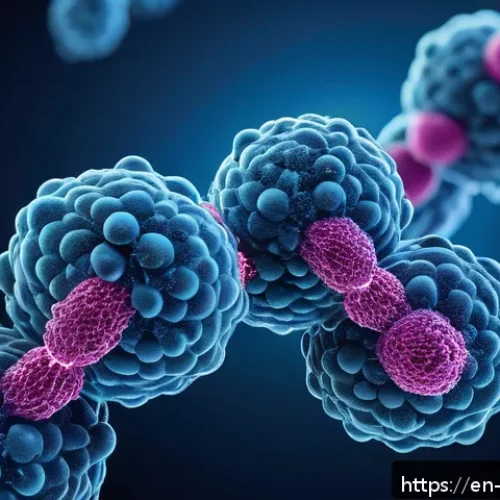
화학 반응 속도 - **Prompt Title: The Molecular Symphony of Speed**

    **Image Prompt:** An ethereal, vibrant illust...

Hey everyone! Ever wondered why some foods cook in minutes while others seem to take an eternity? Or why a pain reliever kicks in so quickly, yet the plastic bottle it came in lasts for what feels like forever?

It all boils down to one incredibly fundamental concept that profoundly impacts our world: chemical reaction rates. As someone who’s spent years immersed in the fascinating world where molecules dance and transform, I can tell you firsthand that understanding “how fast stuff happens” isn’t just for scientists in labs; it’s shaping our everyday lives and fueling the cutting-edge innovations of tomorrow.

Seriously, think about it! From the food on your plate to the fuel in your car, the medications that keep us healthy, and even the revolutionary strides in sustainable energy, chemical kinetics is the unsung hero.

What I’ve found truly mind-blowing is how advancements, especially with AI and machine learning, are now allowing us to predict and control these reactions with unprecedented precision, paving the way for greener manufacturing processes and entirely new materials that were once just a dream.

This isn’t just about theory; it’s about tangible progress in everything from developing next-generation catalysts to optimizing industrial production to be more efficient and eco-friendly.

It’s absolutely pivotal for anyone curious about how our modern world works and where it’s headed. Let’s truly break down what makes these reactions tick and how they’re steering our future!

The Unseen Architects: How Fast is “Fast”?

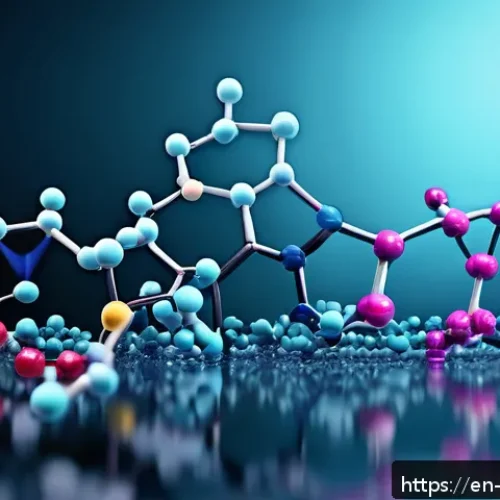
화학 반응 속도 - **Prompt Title: The Molecular Symphony of Speed**

    **Image Prompt:** An ethereal, vibrant illust...

It’s funny, isn’t it? We talk about things happening “fast” or “slow,” but what does that really mean when we’re talking about the invisible world of molecules?

Seriously, think about the sheer magic of something like a piece of paper bursting into flames versus a diamond taking millions of years to form. As someone who’s absolutely captivated by the molecular dance, I’ve spent countless hours pondering this very question.

The speed at which atoms and molecules rearrange themselves, forming new substances, is truly the heartbeat of our universe, yet it often goes unnoticed.

It’s not just about a simple ‘go’ or ‘stop’ switch; it’s a nuanced spectrum where a millisecond can feel like an eternity in a laboratory setting, and a millennium is just a blink in geological time.

This fundamental concept, chemical reaction rates, is what dictates everything from how quickly your coffee brews to how long a bridge stands. Understanding this isn’t just academic; it’s a peek behind the curtain at the incredible engineering that underpins our entire existence.

I’ve personally seen how a tiny tweak in conditions can dramatically alter a reaction’s pace, turning a sluggish process into a rapid transformation, or vice versa.

It’s truly mind-boggling when you dive into it.

Defining the Molecular Dance Floor

At its core, a chemical reaction rate is simply how quickly reactants are consumed and products are formed. Imagine a bustling dance floor where molecules are constantly colliding, some with enough energy and in the right orientation to actually “dance” and form new pairs.

The rate is essentially a measure of how many successful “dances” happen in a given amount of time. If you’re anything like me, you probably think of chemistry as something that happens in a lab, but honestly, it’s happening inside you right now!

Your digestion, your breathing, even the thoughts you’re having are all powered by incredibly intricate biochemical reactions happening at specific, controlled rates.

The precision with which these processes occur, often at lightning speed, is absolutely phenomenal. From the moment you take a pain reliever, its effectiveness hinges on how quickly it can dissolve and react within your body.

The rate defines its onset, its duration, and ultimately, its therapeutic impact.

Why Some Reactions Zoom and Others Crawl

What makes one reaction take off like a rocket while another just… dawdles? It’s not arbitrary, trust me! There are some key players that dictate this molecular tempo.

Think about baking a cake; you know instinctively that temperature matters. Higher heat usually means faster cooking, right? That’s because the molecules are literally moving faster, colliding more frequently and with greater force, increasing the chances of a successful reaction.

Then there’s concentration – imagine trying to find a specific person in a nearly empty room versus a packed stadium. The more molecules crammed into a space, the higher the likelihood of them bumping into each other and reacting.

And catalysts? Oh, catalysts are the true unsung heroes! They’re like the ultimate matchmakers, helping reactants find each other and react without actually getting involved in the “marriage” themselves.

They provide an easier pathway, a shortcut to the reaction, without being consumed in the process. I’ve been fascinated by how different materials can act as such incredible accelerators, literally speeding up processes by millions of times in some cases.

Unlocking the Speed Dial: Factors Driving Chemical Reactions

Have you ever tried to rush a reaction in the kitchen, like caramelizing sugar, only to realize that patience (and the right temperature) is absolutely key?

It’s the same in the vast world of chemistry, just on a much more intricate scale. Understanding what factors act as the “speed dial” for these molecular transformations is where the real magic happens.

It’s not just about observing; it’s about controlling, optimizing, and even designing reactions to behave exactly how we need them to. From manufacturing plastics to synthesizing life-saving drugs, tweaking these variables allows scientists and engineers to fine-tune processes for maximum efficiency, safety, and yield.

I’ve personally been involved in projects where optimizing just one of these factors shaved hours off a production cycle, leading to massive savings and environmental benefits.

It’s incredibly empowering to know that we can manipulate these fundamental aspects of nature to our advantage, creating solutions to real-world problems.

Temperature: The Molecular Mosh Pit Effect

Picture a calm room versus a buzzing concert hall. That’s pretty much the difference temperature makes at the molecular level. When you increase the temperature, you’re essentially pumping more energy into the system.

This makes the molecules zip around faster, causing them to collide more often. But it’s not just about more collisions; it’s about *more energetic* collisions.

Think about two bumper cars barely tapping each other versus two cars smashing into each other at full speed. Only the latter has enough oomph to cause a significant change, right?

In chemistry, this “oomph” is called activation energy. Higher temperatures mean a larger proportion of molecules possess the necessary activation energy, leading to a much higher rate of successful reactions.

This is why we refrigerate food to slow down spoilage – lowering the temperature reduces the rate of the chemical reactions that cause food to go bad.

I always tell people that temperature is probably the most intuitive factor, but its impact is profoundly powerful.

Concentration: More Players, More Collisions

This one feels pretty straightforward once you think about it. If you have a crowded room, the chances of two specific people bumping into each other are much higher than if the room is almost empty, right?

The same principle applies to chemical reactions. When you increase the concentration of reactants, you’re essentially packing more molecules into the same volume.

This means they’re more likely to run into each other, leading to a greater frequency of collisions. More collisions, in turn, lead to more effective collisions (assuming they have enough energy and the right orientation), and therefore, a faster reaction rate.

This is why, for example, a concentrated acid reacts much more vigorously with a metal than a dilute acid. It’s a numbers game, and the more players you have on the field, the more chances there are for them to interact and score a goal!

I’ve seen this play out dramatically in laboratory settings where even a small change in reactant concentration can shift a reaction from crawling to zooming.

Catalysts: The Ultimate Matchmakers

Oh, catalysts! If there’s one thing in chemistry that constantly amazes me, it’s these incredible substances. Catalysts are truly the unsung heroes of countless industrial processes and biological functions.

They don’t get used up in the reaction, and they don’t change the ultimate products, but what they do is provide an entirely new, lower-energy pathway for the reaction to occur.

Imagine climbing a mountain. A catalyst is like finding a tunnel right through the middle, making the journey much faster and easier. They effectively lower the activation energy barrier, allowing more molecules to react at a given temperature and concentration.

Your car’s catalytic converter is a perfect everyday example, transforming harmful pollutants into less toxic substances before they leave the exhaust.

Enzymes in your body are biological catalysts, speeding up reactions vital for life by millions, even billions, of times! I always feel a sense of awe when I consider how a tiny amount of a catalyst can have such a monumental impact on the speed and efficiency of a chemical process.

Advertisement

From Kitchen to Cosmos: Why Reaction Rates Matter Everywhere

It’s easy to think of chemical reaction rates as something confined to a lab, right? But honestly, this concept is so deeply woven into the fabric of our daily lives, from the mundane to the utterly extraordinary, that once you start noticing it, you’ll see it everywhere.

From the moment you wake up and brew your coffee to the vast, complex reactions happening in distant stars, the pace of chemical change is a silent orchestrator.

It impacts how long your food stays fresh, how quickly your car engine runs, the durability of your smartphone, and even the very existence of life on other planets.

I’ve always been fascinated by how something so fundamental can have such diverse and far-reaching implications. It truly highlights the interconnectedness of all scientific disciplines and the universe itself.

Without a grasp of reaction rates, much of our modern world simply wouldn’t function as it does.

Cooking, Cleaning, and Everyday Chemistry

Think about cooking. Browning meat, baking bread, or even just boiling an egg – these are all examples of chemical reactions whose rates we manipulate daily.

We use heat to speed them up (cooking), or refrigeration to slow them down (preserving food). The effectiveness of your cleaning products also hinges on reaction rates.

Bleach and detergents work by reacting with stains and grime, breaking them down into more easily removable substances. A faster reaction means a quicker clean.

Even the simple act of a match igniting is a rapid oxidation reaction that you control with a strike. I remember once trying to make homemade sourdough, and the fermentation process, driven by yeast (a biological catalyst), was a perfect lesson in patience and understanding optimal reaction conditions – temperature, flour type, and water ratios all play a critical role in how quickly the dough rises.

Space Exploration and Durable Materials

Now, let’s zoom out to the cosmos. When designing spacecraft, materials engineers are constantly battling extreme conditions – radical temperature swings, intense radiation, and the vacuum of space.

The durability of these materials, from the heat shields on re-entry vehicles to the sensors on distant probes, is entirely dependent on slowing down undesirable chemical reactions like corrosion or degradation.

We need materials that can withstand millions of miles and years of exposure without breaking down. The development of advanced polymers and alloys with incredibly slow reaction rates under harsh conditions is a triumph of materials science and chemical kinetics.

Imagine a future Mars habitat; its structural integrity will rely on materials engineered to resist years of atmospheric and environmental assault, effectively slowing down any reactions that could compromise its safety.

The Future’s Fuel: AI, ML, and Tailoring Reaction Speeds

Okay, this is where it gets truly exciting and, frankly, a little bit mind-blowing. For centuries, understanding and manipulating chemical reactions has been a process of meticulous experimentation, often involving trial and error.

But what if we could predict exactly how a reaction would behave under any given condition, even before stepping into the lab? This isn’t science fiction anymore!

The advent of artificial intelligence (AI) and machine learning (ML) is fundamentally changing the game. These powerful tools are acting like super-charged crystal balls, allowing us to model, predict, and ultimately control reaction rates with a precision that was once unimaginable.

I’ve seen firsthand how these technologies are accelerating discovery, pushing the boundaries of what’s possible, and opening up entirely new avenues for innovation across every scientific and industrial sector.

Predicting the Unpredictable: AI’s Role

AI, particularly through sophisticated algorithms, is now capable of sifting through colossal amounts of experimental data and theoretical models faster than any human could dream.

It can identify subtle patterns and relationships between molecular structures, reaction conditions, and resulting rates that would be invisible to the human eye.

This means we can predict how a novel catalyst might perform or how a new drug molecule might interact with biological systems, all without needing to synthesize and test every single variant in the lab.

This isn’t just about saving time; it’s about dramatically reducing waste, speeding up drug development, and discovering entirely new chemical pathways for sustainable manufacturing.

It’s like having an infinitely patient and incredibly intelligent research assistant who never sleeps and can process a library’s worth of information in seconds.

Machine Learning: Accelerating Discovery

Machine learning takes this a step further by learning from data, much like we learn from experience. It can be trained on existing chemical reaction datasets and then apply that knowledge to predict the behavior of new, untested reactions.

This iterative process of learning and predicting is revolutionizing fields like materials science and drug discovery. For example, ML algorithms can rapidly screen millions of potential drug candidates, identifying those most likely to have the desired reaction rates with specific biological targets, thereby drastically shortening the preclinical development phase.

In catalysis, ML is helping to design next-generation catalysts with unprecedented efficiency, leading to greener and more cost-effective industrial processes.

The sheer speed and accuracy with which ML can guide experimental design and interpret complex results is truly breathtaking, allowing us to explore chemical space in ways we could only dream of before.

Advertisement

Playing God with Molecules: Manipulating Rates for a Better Tomorrow

If you told someone a hundred years ago that we’d be able to precisely manipulate the speed of chemical reactions to create tailored medicines, super-strong materials, or even entirely new energy sources, they’d probably think you were describing magic.

Yet, here we are! The ability to precisely control reaction rates allows us to play “molecular architects,” designing and building the world around us with incredible intentionality.

This isn’t just about making existing things better; it’s about inventing entirely new solutions to some of humanity’s most pressing challenges. From making our infrastructure more durable to delivering therapies more effectively, the power to fine-tune reaction kinetics is absolutely pivotal.

I genuinely believe that mastering this aspect of chemistry is one of the most impactful ways we can shape a brighter, more sustainable future for everyone.

It’s an exciting time to be alive, witnessing these advancements!

Tailoring Pharmaceuticals for Peak Performance

When you take a medication, you want it to work effectively and predictably, right? That consistency is largely due to our ability to precisely control the chemical reaction rates involved in drug formulation and how they interact with your body.

Pharmaceutical scientists spend years perfecting the rate at which a drug dissolves, is absorbed, and then metabolized, ensuring it reaches its target at the right concentration and for the optimal duration.

Too fast, and you might get side effects or a sudden spike; too slow, and it might not be effective at all. The development of controlled-release medications, for instance, is a brilliant example of manipulating reaction rates to ensure a steady, prolonged therapeutic effect, improving patient compliance and reducing dosing frequency.

It’s a delicate dance, but one that directly impacts our health and well-being.

Designing Advanced Materials Atom by Atom

화학 반응 속도 - **Prompt Title: Everyday Alchemy: Rates in the Kitchen**

    **Image Prompt:** A hyper-realistic, b...

Think about the screen on your smartphone or the lightweight composites used in aircraft. These aren’t just random concoctions; they are meticulously engineered materials where every atom’s interaction and the speed of their formation are precisely controlled.

By understanding and manipulating reaction rates during synthesis, materials scientists can create substances with specific properties – whether it’s incredible strength, flexibility, electrical conductivity, or heat resistance.

For example, tuning the polymerization rate allows engineers to control the length and branching of polymer chains, directly impacting the final material’s strength and elasticity.

This ability to “design” materials at the molecular level, orchestrating the speed of their chemical assembly, is leading to breakthroughs in everything from self-healing coatings to next-generation semiconductors.

It’s truly like building with molecular LEGOs, but with an unparalleled level of precision and control.

Beyond the Beaker: Practical Applications You See Every Day

Sometimes, when we talk about chemistry, it can feel a bit abstract, confined to textbooks and labs with bubbling flasks. But honestly, the impact of chemical reaction rates is everywhere you look, constantly influencing the world around us in ways you probably never even consider.

It’s the silent force behind so much of our modern convenience and safety. From the moment you start your car to how your food stays fresh, these principles are at play.

I always get a kick out of pointing out these “hidden chemistry” moments to friends and family because it truly brings the science to life. It’s a powerful reminder that fundamental scientific concepts aren’t just for academics; they’re integral to the functioning of our entire society.

It really makes you appreciate the thought and engineering that goes into even the most commonplace items.

Your Car’s Engine: A Symphony of Reactions

Think about what happens when you turn the key in your car. It’s not just a mechanical process; it’s an incredible symphony of carefully controlled chemical reactions.

Gasoline, a hydrocarbon fuel, reacts rapidly with oxygen in a combustion reaction to release a massive amount of energy, which is then converted into mechanical motion.

The speed of this combustion reaction is absolutely critical. Too slow, and your engine would be sluggish and inefficient; too fast, and it could lead to damaging pre-ignition or knock.

Modern engine design, fuel formulations, and even ignition timing are all meticulously optimized to ensure this reaction occurs at precisely the right rate, maximizing power output while minimizing emissions.

And as I mentioned earlier, your car’s catalytic converter uses catalysts to speed up reactions that convert harmful exhaust gases into less toxic ones before they’re released into the atmosphere.

It’s a masterclass in chemical kinetics!

Preserving Food: Slowing Down the Spoilage

Have you ever stopped to think about why a banana ripens quickly on the counter but lasts longer in the fridge? Or why packaged food has an expiration date?

It all comes back to chemical reaction rates. Food spoilage is essentially a series of undesirable chemical reactions – oxidation, enzymatic browning, microbial growth – that degrade the quality and safety of your food.

We use various methods to slow down these reactions. Refrigeration drastically lowers the temperature, reducing molecular energy and thus slowing down spoilage.

Packaging can remove oxygen (a reactant in many spoilage reactions) or create a modified atmosphere. Preservatives are chemicals that inhibit or slow down these reactions, extending shelf life.

Even simple canning or freezing works by either eliminating conditions conducive to these reactions or slowing them to a near halt. It’s a constant battle against the natural tendency for things to break down, all managed by understanding how to manipulate reaction speeds.

Factor Influencing Reaction Rate How It Impacts Rate Real-World Example
Temperature Increases molecular kinetic energy, leading to more frequent and energetic collisions. Refrigerating food to slow spoilage; cooking food on a stove.
Concentration More reactant molecules in a given volume increase the likelihood of collisions. A concentrated bleach solution cleans faster than a dilute one.
Surface Area Greater exposed surface allows more sites for reactant interaction. Powdered sugar dissolves faster than a sugar cube.
Catalyst Presence Lowers the activation energy, providing an alternative reaction pathway without being consumed. Enzymes aiding digestion; catalytic converters in cars.
Advertisement

The Green Chemistry Revolution: Slower is Sometimes Better

When we talk about speed in chemistry, we often assume “faster” is always better, right? More efficient, more product, quicker results. And often, that’s true!

But in the burgeoning world of green chemistry, sometimes slowing down certain reactions, or carefully controlling their pace, is absolutely crucial for environmental sustainability.

This paradigm shift focuses on designing chemical products and processes that reduce or eliminate the use and generation of hazardous substances. It’s about being incredibly smart and intentional about how we allow molecules to interact, not just for efficiency but for the planet’s health.

I’ve been incredibly inspired by the innovative approaches I’ve seen in this field, where chemists are actively thinking about the entire lifecycle of a reaction, from raw materials to final waste, and how reaction rates play a role at every step.

Sustainable Manufacturing: Reducing Waste, Boosting Efficiency

In traditional manufacturing, sometimes reactions are rushed, leading to unwanted byproducts or incomplete conversions, which translates directly to waste.

Green chemistry, however, often involves carefully optimizing reaction conditions – including temperature, pressure, and the choice of catalysts – to ensure reactions proceed cleanly and selectively.

By understanding and controlling reaction rates, we can favor the formation of desired products while minimizing side reactions that produce waste. For instance, developing highly selective catalysts allows us to “steer” a reaction towards a specific product, avoiding the formation of polluting alternatives.

This isn’t just good for the environment; it’s also incredibly savvy economically, as less waste means less costly disposal and more valuable product from the same starting materials.

It’s a win-win, and a testament to how intelligent manipulation of reaction kinetics can truly transform industries.

Energy Storage: Making Batteries Last Longer

Think about your phone or electric car battery. The performance and lifespan of these crucial energy storage devices are intimately tied to the rates of the electrochemical reactions happening inside them.

We want the charging and discharging reactions to be efficient and reversible, but we also need to prevent or slow down undesirable “side reactions” that can degrade the battery over time.

These degradation reactions can lead to a loss of capacity, reduced lifespan, and even safety concerns. Researchers are constantly working on new electrode materials and electrolytes that promote fast, reversible energy storage reactions while effectively slowing down these detrimental, irreversible processes.

By carefully controlling the kinetics, they’re developing batteries that not only charge faster and hold more power but also last significantly longer, making electric vehicles and portable electronics more sustainable and reliable.

The Economic Engine: How Reaction Rates Drive Industry

It might sound a bit dry to talk about economics and chemistry in the same breath, but honestly, understanding and controlling chemical reaction rates is a massive economic driver.

It’s the silent engine behind countless industries that power our world, from petrochemicals to pharmaceuticals, agriculture to advanced materials. Every single penny saved by optimizing a reaction, every new product brought to market faster, every waste stream reduced – it all directly impacts bottom lines, creates jobs, and fuels innovation.

I’ve personally seen how even a slight improvement in a reaction’s efficiency can translate into millions of dollars in savings or increased revenue for a company.

This isn’t just abstract science; it’s fundamental to global commerce and competitive advantage. It’s a truly fascinating intersection of scientific understanding and economic reality.

Industrial Scale: Producing More, Faster, Cheaper

Imagine a massive chemical plant producing fertilizers or plastics. Every single step in that process involves chemical reactions. If a critical reaction takes too long, it slows down the entire production line, driving up costs, energy consumption, and labor.

Therefore, engineers and chemists are constantly striving to optimize these reaction rates to achieve maximum output in the shortest possible time, with the highest possible yield.

This involves everything from designing more efficient reactors to developing new catalysts that can operate at milder conditions, saving energy and reducing equipment wear.

Even slight improvements in reaction kinetics at an industrial scale can lead to colossal savings and increased profitability, allowing companies to be more competitive globally.

It’s a constant quest for speed and efficiency, all rooted in a deep understanding of how reactions proceed.

Innovation and Competitive Edge

In today’s fast-paced world, being first to market with a new material, a more effective drug, or a greener manufacturing process can be the difference between success and failure.

The ability to innovate quickly often hinges on how rapidly new chemical reactions can be explored, understood, and scaled up. Companies that can design and implement reactions with superior rates, selectivity, and efficiency gain a significant competitive edge.

This drives massive investment in research and development, pushing the boundaries of chemical kinetics. Whether it’s developing a new battery material that charges faster or a pharmaceutical synthesis that is more cost-effective, the mastery of reaction rates is key to unlocking breakthrough innovations and staying ahead in a global economy that constantly demands better, faster, and smarter solutions.

It’s a high-stakes game where understanding molecular timing is everything.

Advertisement

Closing Thoughts

Wow, what a journey we’ve had through the incredibly dynamic world of chemical reaction rates! I truly hope you’ve come to see that this isn’t just some abstract concept confined to dusty old chemistry labs, but rather the very pulse of our existence. From the food on your plate to the technology in your pocket, and even the future of sustainable energy, understanding how fast (or slow!) molecules dance makes all the difference. It’s been an absolute blast sharing these insights with you, and I genuinely believe that recognizing this molecular choreography adds a whole new layer of appreciation to the world around us. Keep an eye out for these subtle shifts in speed – you’ll start seeing chemistry everywhere!

Useful Information to Know

1. Your refrigerator is a chemist’s best friend! Keeping food cold drastically slows down the chemical reactions responsible for spoilage, making your groceries last much longer and saving you money. This simple act of temperature control is one of the most effective ways we use chemical kinetics in our daily lives, extending freshness and reducing waste without us even thinking about it.

2. Ever wonder why finely chopped ingredients cook faster? It’s all about surface area! More surface exposed means more places for reactions to occur, speeding up everything from sautéing vegetables to dissolving sugar in your coffee. So, the next time you’re in the kitchen, remember that your knife is also a tool for manipulating reaction rates!

3. When you’re cleaning, especially with a concentrated product, always read the instructions! Stronger concentrations mean more reactant molecules are available to interact, leading to faster reactions. This can be great for tackling tough stains quickly but also means you need to be mindful of safety and proper usage to avoid damage or harm.

4. Think of enzymes as tiny biological superheroes. These natural catalysts within your body make vital reactions, like digestion and energy production, happen millions of times faster than they would on their own, keeping you healthy and energized without you even noticing. They’re the unsung heroes orchestrating life’s intricate chemical ballet with incredible precision and speed.

5. The quest for faster-charging phone batteries and longer-lasting electric car power is a direct challenge in controlling reaction rates. Researchers are constantly tweaking materials and designs to make desirable reactions quick and efficient for charging and discharging, while simultaneously suppressing those unwanted side reactions that cause battery degradation over time. It’s a delicate balance that determines how long your devices power your world.

Advertisement

Key Takeaways

Alright, let’s bring it all back home! If there’s one thing I hope you take away from our chat today, it’s that the speed of chemical reactions isn’t just a science experiment; it’s a fundamental principle governing pretty much everything in your world. We explored how factors like temperature, concentration, and those amazing catalysts are the ultimate conductors of this molecular orchestra, dictating how quickly substances transform. Remember, cranking up the heat or adding more reactants generally speeds things up, while catalysts offer a clever shortcut by lowering the energy barrier without getting used up themselves.

We also delved into how this mastery isn’t just for labs – it’s shaping our food, our tech, our medicine, and even the future of sustainable living. From the subtle art of cooking to the grand challenges of space travel and green energy, controlling reaction rates is truly at the heart of innovation that improves our daily lives and addresses global issues. It’s a powerful insight that once you grasp it, changes how you perceive the world. Keep observing, keep questioning, and you’ll undoubtedly start to see the unseen architects of chemical kinetics working their magic everywhere.

Frequently Asked Questions (FAQ) 📖

Q: What actually makes some chemical reactions super speedy while others crawl along at a snail’s pace?

A: Oh, this is such a fantastic question, and honestly, it’s one of the core mysteries I’ve loved unraveling over the years! From my experience, there are a few key players that really dictate a reaction’s tempo.
First off, temperature is a huge one. Think about trying to dissolve sugar in cold water versus hot tea – the hot tea works way faster, right? That’s because higher temperatures give those molecules more energy, making them bump into each other more frequently and with greater force, which is essential for reactions to happen.
Then there’s concentration; if you have more “stuff” packed into a space, the chances of those molecules finding and reacting with each other dramatically increase.
Imagine a crowded concert versus an empty park – you’re much more likely to bump into someone in the crowd! Surface area also plays a massive role, especially for reactions involving solids.
Crushing a sugar cube into powder before dissolving it makes it disappear much quicker because more of its surface is exposed to the water. And finally, my personal favorite: catalysts!
These are truly fascinating substances that can speed up a reaction without actually being consumed themselves. They basically offer a more efficient “pathway” for the reaction to take.
It’s like finding a shortcut on your daily commute; you get to your destination faster without changing where you started or ended up. Understanding these factors has personally helped me make sense of everything from how our bodies process food to why certain industrial processes need specific conditions.
It’s all about creating the perfect environment for those molecular dance moves!

Q: Why is understanding how fast reactions happen so important for our everyday lives and even for future innovations?

A: That’s a brilliant point! It might sound like something confined to a lab, but trust me, chemical reaction rates are the unsung heroes of our modern world.
I’ve personally seen how pivotal this knowledge is across so many fields. For starters, think about your own health. The speed at which medicines dissolve and are absorbed by your body directly impacts how quickly you feel better – or if they work at all!
And in food preservation, controlling reaction rates is key to keeping our groceries fresh and safe. On a larger scale, knowing these rates is absolutely critical for industries.
Manufacturers can design more efficient and safer chemical processes, which means less waste and lower energy consumption. This is huge for our planet, leading to greener technologies and more sustainable practices.
What I find truly exciting is how it’s fueling the future. Developing new materials for everything from faster phone batteries to lighter, stronger airplane parts relies heavily on tweaking and understanding reaction kinetics.
It’s not just about making things; it’s about making them better, safer, and more efficiently. From preventing rust on your car to powering the next generation of electric vehicles, the mastery of reaction rates is undeniably at the heart of progress.
It’s truly fascinating how this fundamental science touches every aspect of our existence!

Q: How are cutting-edge technologies like

A: I and machine learning transforming how we predict and control chemical reaction rates?
A3: Oh, this is where it gets incredibly exciting, and honestly, it’s one of the most talked-about advancements I’ve encountered recently!
Traditionally, figuring out reaction rates involved a lot of trial and error in the lab, which could be incredibly time-consuming and expensive. But now, with the incredible power of artificial intelligence and machine learning, we’re essentially fast-forwarding the future.
What I’ve seen firsthand is how AI algorithms can analyze vast datasets of chemical reactions – information that would take a human a lifetime to process – and then start to identify complex patterns and make surprisingly accurate predictions about how new reactions will behave.
It’s like having a super-smart assistant who can instantly learn from millions of experiments. This means scientists and engineers can design experiments more intelligently, pinpointing optimal conditions for reactions much faster than ever before.
We’re talking about accelerating the discovery of new catalysts for sustainable energy, creating novel drugs with greater precision, and even designing entirely new materials with bespoke properties.
For me, the most jaw-dropping aspect is the ability of AI to even suggest entirely new reaction pathways that humans might never have considered. It’s not just making things faster; it’s opening up completely new frontiers in chemistry, allowing us to control molecular transformations with unprecedented precision and ushering in an era of truly intelligent chemical design.
It’s truly a game-changer!