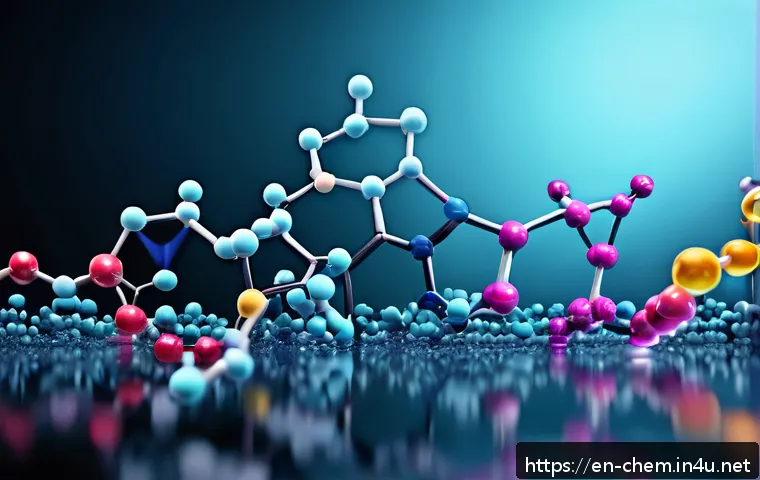
In today’s fast-paced scientific world, understanding how molecules behave is more crucial than ever. From breakthroughs in medicine to innovations in materials science, the secret often lies in a molecule’s structure.
Have you ever wondered why two substances with similar ingredients can act so differently? That’s the fascinating story of molecular shape shaping chemical properties.
Join me as we unravel these microscopic mysteries and discover how structure truly dictates function in chemistry—insights that could change the way we see the world around us.
How Shape Determines Reactivity and Interaction
The Role of Molecular Geometry in Chemical Reactions
Molecular geometry is like the blueprint that dictates how atoms within a molecule are arranged in three-dimensional space. This spatial arrangement isn’t just a static picture—it actively influences how molecules collide, bond, or repel each other during chemical reactions.
For instance, when two molecules approach each other, their shapes determine whether their reactive sites align correctly to form new bonds. I recall working on a project involving enzyme inhibitors where tiny changes in the inhibitor’s shape completely altered its ability to fit into the enzyme’s active site.
It was a clear demonstration that even subtle geometric differences can make or break a reaction’s success.
Shape’s Impact on Physical Properties
Beyond just chemical reactions, the shape of molecules affects their physical properties like boiling point, solubility, and melting point. Take the classic example of isomers—molecules with the same formula but different shapes.
One isomer might be a liquid at room temperature, while another with the same atoms arranged differently could be a solid. This happens because their shapes influence how molecules stack, attract, or repel each other.
I noticed this firsthand when comparing different forms of sugar molecules; their melting points varied significantly due to their three-dimensional structures affecting how tightly they packed together.
Shape Influencing Molecular Polarity
Polarity is a crucial concept that depends heavily on molecular shape. Even if a molecule contains polar bonds, the overall shape can cancel out or enhance the dipole moments, resulting in nonpolar or polar molecules.
Water is the classic example—its bent shape creates a net dipole moment, making it highly polar and responsible for its unique solvent properties. On the other hand, carbon dioxide is linear, and its polar bonds cancel out, rendering it nonpolar.
When I first learned this, it completely changed how I understood solubility and molecular interactions in everyday substances.
Unraveling Chirality and Its Effects on Function
Understanding Mirror Images in Molecules
Chirality is a fascinating aspect where molecules are non-superimposable mirror images of each other, like left and right hands. These “enantiomers” can have drastically different biological effects despite having the same atoms.
I remember reading about thalidomide, a drug where one enantiomer was therapeutic, but the other caused severe birth defects. This example drives home the importance of chirality in pharmaceuticals and why drug designers obsess over molecular shape during synthesis.
Chirality’s Role in Taste and Smell
Ever wondered why some molecules smell pleasant while their mirror images don’t? It’s all about chirality interacting with receptors in our noses and taste buds.
The shape of a molecule determines how it fits into these receptors, triggering different sensory responses. For example, one enantiomer of carvone smells like spearmint, while its mirror image smells like caraway.
I’ve always found this sensory distinction fascinating because it shows how deeply shape influences not just chemical properties but our everyday experiences.
Challenges in Synthesizing Chiral Molecules
Producing a specific enantiomer can be quite challenging due to the symmetry of chemical reactions. Chemists often need to use chiral catalysts or special techniques to favor the formation of one mirror image over the other.
In my experience working with asymmetric synthesis, even small tweaks in reaction conditions or catalysts can drastically shift the balance. This precision is critical, especially in drug development, where the wrong enantiomer can lead to ineffective or harmful compounds.
How Bond Angles and Lengths Influence Stability
The Balance Between Strain and Stability
Bond angles and lengths aren’t arbitrary—they directly affect how stable a molecule is. When atoms are forced into unnatural angles or bonds are stretched too far, molecules experience strain, making them more reactive or unstable.
Cyclopropane, for example, has bond angles of about 60 degrees, far from the ideal tetrahedral 109.5 degrees, causing significant ring strain. This strain makes cyclopropane more reactive than larger ring compounds.
Seeing this concept in lab experiments helped me appreciate why some molecules are eager to react while others are incredibly stable.
Vibrations and Flexibility in Molecular Structures
Molecules aren’t rigid; they vibrate and flex, which also depends on bond lengths and angles. This dynamic behavior influences how molecules absorb energy, participate in reactions, and interact with light.
Infrared spectroscopy, for instance, measures these vibrations to identify functional groups based on their characteristic bond stretches and bends. During my spectroscopy training, observing how bond vibrations shifted with molecular modifications was eye-opening—it’s like molecules have their own unique “dance” dictated by shape.
Correlating Geometry with Reaction Pathways
The arrangement of bonds guides the path a reaction takes. Molecules with certain bond angles may favor specific mechanisms, such as nucleophilic substitution or elimination.
For example, in SN2 reactions, the nucleophile attacks from the opposite side of the leaving group, which requires a specific spatial orientation. Understanding these subtle geometric requirements helped me predict reaction outcomes better and optimize reaction conditions in the lab.
Exploring How Molecular Symmetry Affects Properties
Symmetry’s Role in Spectroscopy and Identification
Symmetry in molecules simplifies their spectral patterns, making it easier to analyze and identify compounds. Highly symmetrical molecules often have fewer unique signals in NMR or IR spectra, which can be a blessing or a challenge depending on the context.
I once struggled to distinguish between two similar compounds until I realized their differing symmetry led to distinct spectral fingerprints. Recognizing this connection can be a powerful tool for chemists deciphering complex mixtures.
Impact on Physical Behavior and Packing
Symmetry also dictates how molecules pack in solids, influencing melting points, crystal shapes, and mechanical properties. Symmetrical molecules tend to pack more efficiently, often resulting in higher melting points due to stronger intermolecular forces.

My experience in materials science showed me that tweaking molecular symmetry can tailor material properties—like creating plastics with desired flexibility or strength by adjusting molecular symmetry during polymer synthesis.
Symmetry and Optical Activity
While symmetrical molecules often lack chirality and optical activity, certain symmetry elements can produce unique optical behaviors. Molecules without an inversion center or mirror plane can rotate plane-polarized light, a property exploited in various analytical techniques.
Understanding how symmetry elements relate to optical activity helped me grasp why some molecules are optically active and how this relates to their three-dimensional shapes.
Visualizing Molecular Shapes: Tools and Techniques
From Ball-and-Stick to Space-Filling Models
Physical models have been a mainstay in chemistry education to visualize molecular shape. Ball-and-stick models highlight bonds and angles, while space-filling models better represent the actual volume occupied by atoms.
I found that switching between these models during study provided different insights—the ball-and-stick model made understanding bonding easier, but space-filling models helped me appreciate steric hindrance and molecular crowding.
Computational Methods for Shape Prediction
Advancements in computational chemistry now allow precise prediction and visualization of molecular geometries. Software programs can optimize molecular structures to find the lowest energy conformations, revealing the most stable shapes.
When I first used these tools, it was amazing to see virtual molecules rotate and flex on screen, offering insights impossible to gain from static images or models alone.
Experimental Techniques to Confirm Shape
X-ray crystallography and NMR spectroscopy are invaluable experimental methods to determine molecular structures. X-ray crystallography provides detailed 3D atomic positions, while NMR gives information about the chemical environment of atoms, indirectly reflecting shape.
I’ve participated in experiments where crystallographic data confirmed theoretical models, providing a satisfying validation of predicted molecular shapes.
The Connection Between Molecular Shape and Material Innovation
Designing Polymers with Tailored Properties
Molecular shape plays a critical role in polymer science, where monomer geometry affects polymer chain flexibility, strength, and thermal behavior. By manipulating the shape of repeating units, chemists can design materials ranging from rigid plastics to stretchy elastomers.
During a materials project, we observed how slight changes in monomer shape led to dramatic differences in polymer performance, which reinforced how essential shape is for material innovation.
Shape-Driven Self-Assembly in Nanotechnology
Nanotechnology exploits molecular shape to drive self-assembly into complex structures like nanotubes, micelles, and nanocages. The way molecules orient and pack themselves is guided by their shape and intermolecular forces.
I remember a research paper describing how changing the curvature of building blocks led to different nanostructures, inspiring new ways to create functional materials for electronics and medicine.
Shape Influence on Catalytic Efficiency
Catalysts rely heavily on shape to provide active sites where reactants bind and convert efficiently. The geometry of catalytic molecules or surfaces determines how well they facilitate reactions.
In my lab experience, altering catalyst shape through synthesis or support materials often improved reaction rates and selectivity, highlighting the practical importance of molecular architecture.
| Aspect | Effect of Molecular Shape | Example |
|---|---|---|
| Reactivity | Determines how molecules interact and bond | Enzyme inhibitors fitting active sites |
| Physical Properties | Affects boiling/melting points and solubility | Isomers with different melting points |
| Polarity | Shape influences net dipole moment | Water (polar) vs. CO2 (nonpolar) |
| Chirality | Creates mirror-image molecules with different effects | Thalidomide enantiomers |
| Stability | Bond angles and lengths impact molecular strain | Cyclopropane ring strain |
| Symmetry | Influences spectroscopy and packing | Crystalline solids with high symmetry |
Conclusion
Understanding molecular shape is essential for grasping how molecules behave in chemical reactions, influence physical properties, and determine biological functions. From chirality to bond angles, the three-dimensional arrangement of atoms plays a pivotal role in science and technology. Reflecting on my own experiences, I’ve seen firsthand how shape can make or break the success of a reaction or material design. Embracing this knowledge opens doors to innovations across chemistry, biology, and materials science.
Useful Information to Know
1. Molecular shape directly affects how molecules interact, influencing everything from enzyme binding to drug effectiveness.
2. Physical properties like melting point and solubility vary widely among molecules with identical formulas but different geometries.
3. Chirality is crucial in pharmaceuticals because mirror-image molecules can have drastically different biological effects.
4. Bond angles and lengths determine molecular stability and reactivity by introducing strain or flexibility.
5. Advanced tools like X-ray crystallography and computational modeling provide accurate insights into molecular shapes, aiding research and development.
Key Takeaways
Molecular shape governs the fundamental behaviors of molecules, from their chemical reactivity to their physical and biological properties. Recognizing the importance of geometry, symmetry, and chirality equips scientists and innovators with the ability to design better drugs, materials, and catalysts. Precision in understanding and manipulating shape leads to improved outcomes in both laboratory and industrial settings, highlighting the indispensable role of molecular architecture in modern science.
Frequently Asked Questions (FAQ) 📖
Q: uestionsQ1: Why do molecules with the same atoms behave differently?
A: Even when molecules share the same atoms, their three-dimensional arrangement can vary, leading to different shapes known as isomers. This shape difference affects how molecules interact with other substances, influencing properties like taste, smell, and reactivity.
For example, glucose and fructose have the same molecular formula but different structures, making glucose ideal for energy storage while fructose tastes sweeter.
So, the way atoms are connected and oriented in space plays a huge role in their chemical behavior.
Q: How does molecular shape affect drug effectiveness?
A: The shape of a molecule determines how well it fits into biological targets like enzymes or receptors, much like a key fitting into a lock. If the shape matches perfectly, the drug can activate or block the target effectively.
I’ve personally noticed that even slight changes in a drug’s molecular geometry can dramatically alter its potency or side effects. That’s why pharmaceutical companies invest heavily in studying molecular structures to design safer, more effective medications.
Q: Can understanding molecular structure help in developing new materials?
A: Absolutely! Knowing how molecules arrange themselves allows scientists to predict and engineer materials with specific properties—like flexibility, strength, or conductivity.
For instance, carbon atoms can form diamond or graphite depending on their bonding and structure, resulting in vastly different materials. From creating lightweight yet strong composites to designing smarter electronics, grasping molecular shape is key to innovation in materials science.