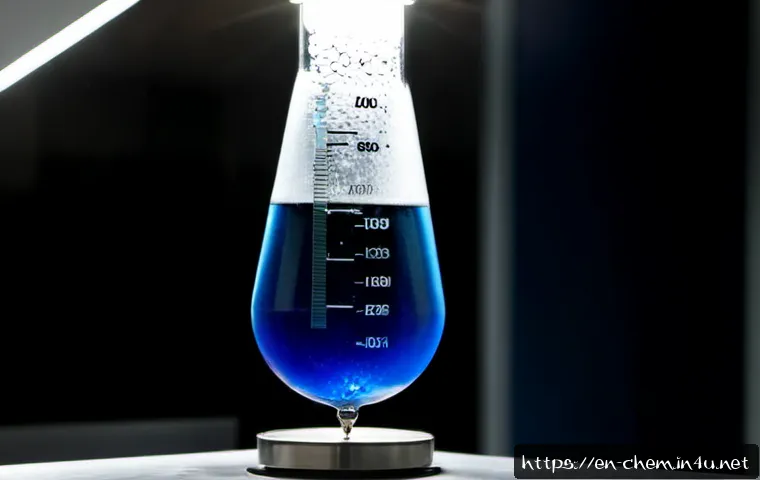
In today’s fast-evolving scientific landscape, understanding the fundamentals of analytical chemistry has never been more crucial. Whether you’re stepping into a lab for the first time or simply curious about how substances are identified and measured, these core concepts unlock a world of precision and discovery.
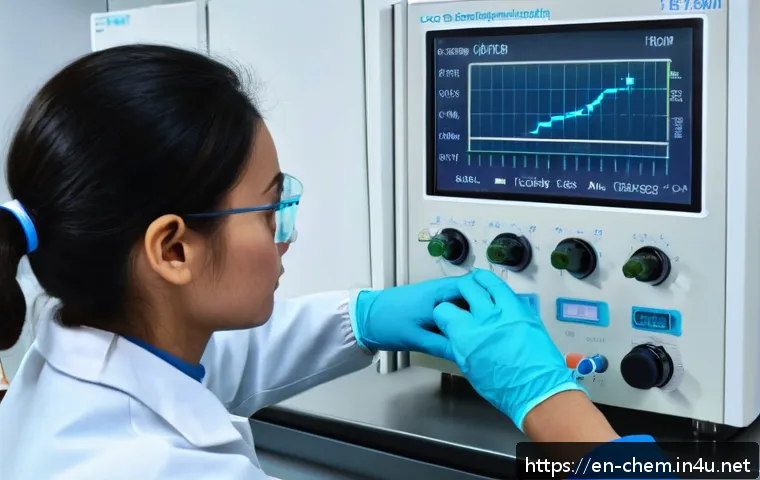
With breakthroughs in technology reshaping how we analyze everything from environmental samples to pharmaceuticals, gaining a solid grasp on analytical techniques is key.
Join me as we explore the essential principles that every beginner should know to navigate this fascinating field confidently. By the end, you’ll see how these tools impact not just science, but everyday life in surprising ways.
Let’s dive in and uncover the secrets behind the numbers and formulas!
Understanding Measurement and Instrumentation in Analytical Chemistry
The Role of Precision and Accuracy
When you first step into an analytical chemistry lab, the terms precision and accuracy might seem interchangeable, but they are fundamentally different and equally critical.
Precision refers to the consistency of repeated measurements, while accuracy is about how close a measurement is to the true value. Imagine weighing a sample multiple times—if your scale gives you very similar results every time, that’s good precision.
However, if those results are far from the actual mass, accuracy is poor. Both are essential because a precise but inaccurate method can mislead, and an accurate but imprecise technique lacks reliability.
In practice, achieving both requires well-calibrated instruments and rigorous procedures, especially when dealing with trace analysis or quality control in pharmaceuticals.
Modern Analytical Instruments and Their Applications
The evolution of instrumentation has transformed how we approach chemical analysis. Techniques like spectroscopy, chromatography, and electrochemical analysis are now staples, each suited for different tasks.
For instance, gas chromatography excels at separating complex mixtures, while UV-Vis spectroscopy provides quick concentration measurements based on light absorbance.
The beauty of these tools lies in their adaptability—from monitoring pollutants in air and water to ensuring the purity of drugs. Learning how to operate these instruments and interpret their output is a skill that grows with hands-on experience.
When I first used an HPLC (High-Performance Liquid Chromatography) machine, it was eye-opening to see how subtle changes in flow rate or solvent composition could drastically affect results.
Calibration and Standardization: Foundations of Reliable Data
Calibration is the backbone of trustworthy analytical results. It involves comparing instrument responses against known standards to establish a relationship between signal and analyte concentration.
Standardization ensures that this process is consistent over time, which is crucial for longitudinal studies or regulatory compliance. I recall a project where we had to analyze vitamin C content in fruit juices.
Without proper calibration using certified reference materials, our results varied wildly. Establishing a calibration curve not only improved accuracy but also gave us confidence when reporting findings.
Understanding the principles behind these practices helps prevent common pitfalls like instrument drift or matrix effects.
Exploring Sample Preparation Techniques
Why Sample Preparation Matters
In analytical chemistry, the journey to accurate results often begins long before the instrument analysis—with sample preparation. Raw samples can be complex mixtures with interfering substances that mask or distort the target analytes.
Effective preparation techniques remove these obstacles, concentrate the analytes, and bring the sample into a form compatible with the chosen analytical method.
For example, in environmental testing, filtering water samples to remove particulates is a crucial step. From my experience, skipping or rushing this phase can lead to inconsistent results and frustration.
It’s a bit like cooking; even the best recipe can fail if the ingredients aren’t properly prepped.
Common Techniques: Extraction, Filtration, and Digestion
Extraction methods such as liquid-liquid or solid-phase extraction help isolate analytes from complex matrices. Filtration removes suspended solids, which is essential when dealing with liquids or slurries.
Digestion, often using acids or enzymes, breaks down tough sample matrices like soils or biological tissues to free analytes. Each technique requires understanding the sample’s nature and the chemistry involved.
I remember analyzing heavy metals in sediment samples, where acid digestion was indispensable to release metals bound within mineral structures. Mastering these techniques allows analysts to tailor preparation steps, enhancing sensitivity and specificity.
Minimizing Contamination and Loss
Handling samples carefully is vital to avoid contamination or analyte loss. Even trace amounts of contaminants can skew results, especially in trace analysis.
Using clean labware, working in controlled environments, and employing proper storage techniques are all part of good laboratory practice. I’ve seen how contamination from gloves or dust particles can introduce errors, forcing repeat analyses and delaying projects.
Likewise, analyte loss through evaporation or adsorption onto container walls can be minimized by selecting appropriate materials and conditions. These seemingly small details often make the difference between reliable data and questionable findings.
Quantitative vs. Qualitative Analysis: Knowing the Difference
Defining Qualitative Analysis
Qualitative analysis focuses on identifying what substances are present in a sample without determining their exact amounts. Techniques like colorimetric tests, infrared spectroscopy, or simple spot tests fall under this category.
For example, detecting the presence of chloride ions via silver nitrate precipitation is a classic qualitative method. In a teaching lab, I found qualitative tests invaluable for quickly screening unknown samples before committing to more complex quantitative procedures.
They provide a first glimpse into the sample’s composition, guiding further analytical steps.
The Essentials of Quantitative Analysis
Quantitative analysis, on the other hand, measures how much of a substance is present. This is where calibration curves, internal standards, and precise measurement come into play.
Whether determining glucose concentration in blood or pesticide residues in food, quantitative methods provide data critical for decision-making. I once worked on a quality control project for a beverage company, where even small deviations in sugar content impacted product consistency.
Quantitative methods gave us the confidence to ensure every batch met specifications.
Bridging Both Worlds in Routine Analysis
In practice, many analytical workflows combine qualitative and quantitative approaches. Initial qualitative screening narrows down potential analytes, followed by quantitative assays to provide exact figures.
This synergy optimizes time and resources, especially in high-throughput environments. For instance, environmental labs often use qualitative tests to detect the presence of contaminants before quantifying them using chromatography or spectroscopy.
Understanding when and how to use each approach enhances an analyst’s efficiency and accuracy.
Data Interpretation and Error Management
Understanding Sources of Error
Errors in analytical chemistry can stem from various sources—instrumental, human, or environmental. Instrumental errors include calibration drift or detector noise, while human errors might involve sample mishandling or calculation mistakes.
Environmental factors such as temperature fluctuations can also impact results. Early in my career, I underestimated the effect of lab temperature on reagent stability, which introduced variability in my measurements.
Recognizing and accounting for these errors is crucial for producing credible data.
Statistical Tools to Assess Data Quality
Statistical methods like standard deviation, confidence intervals, and control charts help evaluate the reliability of data. They allow analysts to distinguish between random variation and systematic bias.
Using these tools, I was able to identify a recurring error pattern in a series of assays, which led to recalibrating the instrument and ultimately improved data quality.
Being comfortable with these concepts empowers analysts to make informed decisions about data acceptance or the need for retesting.
Reporting and Documentation Best Practices
Transparent and thorough reporting is vital for reproducibility and regulatory compliance. Documenting every step—from sample collection to final analysis—builds trust in the results.
I’ve found that detailed lab notebooks and digital records not only help in audits but also serve as invaluable references when troubleshooting. Clear communication of uncertainty and potential limitations further enhances the credibility of analytical reports.
Comparing Analytical Techniques: Strengths and Limitations
| Technique | Strengths | Limitations | Typical Applications |
|---|---|---|---|
| Gas Chromatography (GC) | High resolution, excellent for volatile compounds | Requires volatile samples, sometimes complex sample prep | Environmental pollutants, flavor analysis |
| High-Performance Liquid Chromatography (HPLC) | Versatile, suitable for non-volatile and thermally unstable compounds | Expensive equipment, longer run times | Pharmaceuticals, food additives |
| UV-Vis Spectroscopy | Rapid, non-destructive, cost-effective | Limited to chromophore-containing compounds | Concentration determination, enzyme assays |
| Atomic Absorption Spectroscopy (AAS) | Sensitive for metal analysis | Requires sample digestion, limited to metals | Trace metal detection in water and soil |
| Mass Spectrometry (MS) | Highly sensitive, provides molecular weight and structure info | High cost, complex data interpretation | Proteomics, metabolomics, forensic analysis |
Choosing the Right Method for Your Analysis
Selecting an analytical technique depends on the nature of your sample, the analyte of interest, and the required sensitivity. Early on, I learned that no single method fits all scenarios.
For instance, if you need to detect trace metals, AAS or ICP-MS might be your go-to, but for organic compounds, chromatography combined with MS is often preferred.
Balancing cost, time, and accuracy is part of the decision-making process. The more you familiarize yourself with these techniques, the better equipped you’ll be to design effective analytical strategies.
Emerging Trends and Technologies
The field continues to innovate, integrating automation, miniaturization, and AI-driven data analysis. Portable spectrometers and lab-on-a-chip devices are making in-field analysis more accessible.
I’ve had the chance to test handheld Raman spectrometers, which provide immediate results without complex sample prep—game changers for environmental monitoring or food safety inspections.
Staying updated with these advancements can open new doors for faster, smarter, and more accurate analysis.
Concluding Thoughts
Analytical chemistry is a dynamic field where precision, careful preparation, and the right choice of instruments come together to provide meaningful data. Through experience and attention to detail, one can navigate its complexities effectively. Embracing both traditional techniques and emerging technologies paves the way for more accurate and efficient analyses. Ultimately, a solid understanding of measurement and instrumentation is key to unlocking reliable and impactful results.
Useful Information to Remember
1. Precision and accuracy are distinct but equally important; both ensure trustworthy measurements in analytical chemistry.
2. Proper sample preparation is essential to eliminate interference and improve the reliability of analytical results.
3. Calibration and standardization are foundational practices that maintain consistency and validity over time.
4. Combining qualitative and quantitative analyses can optimize workflow and enhance data interpretation.
5. Staying informed about new instrumentation and automation can significantly improve efficiency and data quality.
Key Takeaways
Understanding the fundamental differences between precision and accuracy helps avoid common pitfalls in measurement. Effective sample preparation and contamination control are critical steps that directly influence the quality of results. Selecting the appropriate analytical technique depends on the specific requirements of the analysis, balancing sensitivity, cost, and complexity. Regular calibration and statistical evaluation of data strengthen the reliability and reproducibility of findings. Finally, embracing innovation while mastering core principles enables analysts to deliver consistent, high-quality outcomes in diverse applications.
Frequently Asked Questions (FAQ) 📖
Q: What are the basic techniques used in analytical chemistry that beginners should focus on?
A: For those just starting out, it’s essential to get comfortable with techniques like titration, chromatography, spectroscopy, and electrochemical analysis.
These methods form the backbone of analytical chemistry, each serving unique purposes—from separating complex mixtures to identifying the concentration of substances.
When I first learned them, hands-on practice was key; for instance, performing a simple acid-base titration helped me understand precision and accuracy in measurements.
Mastering these basics provides a strong foundation for more advanced analytical methods down the line.
Q: How does analytical chemistry impact everyday life beyond the laboratory?
A: Analytical chemistry plays a huge role outside the lab, often in ways we don’t immediately notice. It’s behind quality control in food and beverages, ensuring safety and consistency.
In healthcare, it helps in diagnosing diseases by analyzing blood or urine samples. Environmental monitoring relies on these techniques to detect pollutants in air and water, protecting public health.
From my experience, understanding this field deepens your appreciation for the science that quietly supports daily life, from the medicine we take to the purity of the water we drink.
Q: What are some recent technological advancements in analytical chemistry that beginners should be aware of?
A: Recent years have seen impressive leaps, like the integration of AI and machine learning to analyze complex data faster and more accurately. Portable devices, such as handheld spectrometers, are making on-site analysis accessible, which is a game-changer for fieldwork.
Techniques like mass spectrometry have also become more sensitive, allowing for the detection of trace substances at previously impossible levels. When I tried out some of these new tools, it was clear how technology is not only improving precision but also making analytical chemistry more approachable and efficient for newcomers.