In today’s fast-paced world, chemistry classrooms are experiencing an exciting transformation thanks to innovative digital tools. As technology continues to advance, educators are finding fresh ways to engage students beyond traditional lectures and textbooks.
From interactive simulations to virtual labs, these tools are making complex scientific concepts more accessible and fun. If you’ve ever struggled to visualize molecular structures or chemical reactions, you’re not alone—and digital resources are here to change that.
Join me as we explore how these game-changing innovations are reshaping science education and paving the way for a more dynamic learning experience. This isn’t just about tech—it’s about sparking curiosity and deepening understanding in ways we never thought possible.
Revolutionizing Engagement with Interactive Chemistry Tools
Immersive Simulations That Bring Molecules to Life
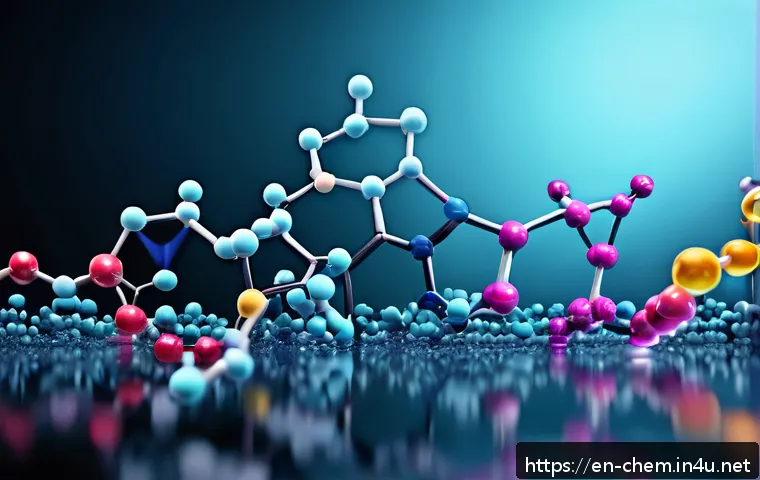
One of the most striking shifts in chemistry education is how interactive simulations have transformed abstract ideas into vivid experiences. Instead of staring at static images in textbooks, students can now manipulate molecular structures in 3D, rotate atoms, and observe how bonds form and break in real time.
From my experience, this hands-on approach sparks genuine curiosity and a deeper emotional connection to the material. I remember struggling to understand hybridization until I used an interactive simulation that let me visualize orbital overlaps—suddenly, the concept clicked effortlessly.
These tools don’t just illustrate; they invite exploration, making learning feel like a personal discovery rather than a chore.
Virtual Labs: Experiment Anytime, Anywhere
Access to lab equipment can be limited by budget, safety, or time constraints, but virtual labs are breaking down these barriers. Students can perform chemical reactions, measure pH levels, and even test reaction rates through realistic virtual environments.
What’s remarkable is how these platforms balance accuracy with safety, allowing learners to experiment without the fear of spills or hazardous mishaps.
When I tested a virtual titration lab, I appreciated how it reinforced procedural skills while encouraging me to try different approaches without consequences.
This freedom to experiment fosters confidence and problem-solving skills that traditional labs sometimes can’t provide.
Gamification to Boost Motivation and Retention
Chemistry can feel intimidating, but gamified learning tools inject fun and competition into the mix. Quizzes, challenges, and badge systems reward progress and encourage repeated engagement.
From my perspective, this approach makes studying less of a task and more of a game. I’ve noticed students who struggled with memorizing the periodic table became more enthusiastic when they could unlock achievements by mastering groups and periods.
Gamification taps into our natural desire for accomplishment, making it easier to stay motivated over time and retain complex information.
Enhancing Conceptual Understanding Through Visualization
3D Molecular Modeling: Seeing Beyond Formulas
Chemical formulas are just the tip of the iceberg; understanding spatial arrangements is crucial for grasping reactivity and properties. 3D molecular modeling software allows students to see molecules from every angle, revealing details like bond angles and stereochemistry that are impossible to capture on paper.
From my own experience, using 3D models helped me make sense of chirality, a topic I previously found confusing. Being able to rotate molecules and compare enantiomers side-by-side made the concepts tangible and memorable.
This visual clarity is a game-changer for learners who struggle with abstract chemical notation.
Dynamic Reaction Mechanisms and Pathways
Reaction mechanisms often feel like a sequence of mysterious arrows on paper, but digital animations can demystify them by showing electron flow step-by-step.
Watching a reaction unfold dynamically helps students predict products and understand why certain pathways are favored. I found that seeing these processes animated helped me connect theory to real-world chemical behavior.
Instead of rote memorization, I started to think critically about how electrons move and why specific intermediates form, which greatly improved my problem-solving skills on exams and in lab work.
Augmented Reality to Bridge Theory and Practice
Augmented reality (AR) apps overlay digital information onto physical spaces, offering an exciting way to explore chemistry interactively. Imagine pointing a tablet at a molecular model and instantly seeing detailed information about its properties or watching a virtual simulation of a reaction superimposed on your desk.
I had the chance to try an AR chemistry app that made studying organic functional groups more engaging by providing instant feedback and visual cues. This blending of real and virtual worlds enhances comprehension and keeps students actively involved, making the learning experience feel fresh and innovative.
Breaking Down Barriers with Accessibility and Inclusivity
Customized Learning Paths for Diverse Needs
Digital tools enable tailored learning experiences that accommodate different paces and styles. For students who need extra time or prefer visual over textual information, platforms can adapt content accordingly.
From my observations tutoring students, this personalized approach helps reduce frustration and encourages persistence. Features like adjustable difficulty levels, subtitles, and alternative explanations make chemistry more approachable, ensuring no learner is left behind due to rigid teaching methods.
Bridging Language Gaps with Multilingual Resources
Chemistry jargon can be daunting, especially for non-native English speakers. Many digital platforms now offer multilingual support, glossaries, and translation features that ease comprehension.
I’ve worked with international students who greatly benefited from tools that clarified terminology and provided bilingual explanations. This inclusivity not only improves understanding but also fosters confidence, empowering students to participate fully in class discussions and labs.
Accessible Formats for Students with Disabilities
Technology is opening doors for students with disabilities through features like screen readers, voice commands, and tactile feedback devices. These innovations ensure that everyone can engage with chemistry content meaningfully.
I recall a colleague using voice-activated software to navigate virtual labs, allowing him to conduct experiments despite limited hand mobility. Such advances exemplify how digital tools promote equity in education by adapting to varied needs and ensuring chemistry remains accessible to all.
Streamlining Assessment and Feedback with Technology
Instant Grading and Personalized Feedback
Traditional assessments often involve delays in grading and limited personalized feedback, but digital platforms are changing that. Automated quizzes and assignments provide immediate results, highlighting areas for improvement and reinforcing learning in real time.
From what I’ve seen, this instant feedback loop encourages students to reflect on mistakes promptly and adjust their study strategies, leading to better outcomes.
It also frees educators to focus on more meaningful interactions rather than administrative tasks.
Data-Driven Insights to Guide Instruction
Learning management systems collect valuable data on student performance, helping teachers identify trends and tailor their lessons. For example, if many students struggle with equilibrium concepts, instructors can revisit the topic or introduce supplementary materials.
I’ve witnessed how data analytics empower educators to make informed decisions, improving class-wide understanding and individual support. This strategic approach enhances the overall learning environment by targeting weaknesses effectively.
Collaborative Platforms for Peer Learning
Digital tools often include discussion boards, group projects, and shared virtual workspaces that promote collaboration. Peer-to-peer interaction reinforces concepts and develops communication skills essential for scientific inquiry.
I experienced this firsthand during a virtual chemistry course where group activities deepened my understanding through diverse perspectives. Collaborative platforms create a community feel, making students feel less isolated and more motivated to engage actively.
Future-Proofing Chemistry Education with Emerging Technologies
Artificial Intelligence as a Personalized Tutor
AI-powered tutoring systems are beginning to offer customized support by analyzing student responses and adapting explanations. These virtual tutors can simulate one-on-one interactions, providing tailored hints and challenges that match individual needs.
I experimented with an AI tutor that helped me review acid-base concepts by adjusting difficulty based on my progress. This personalized guidance enhances learning efficiency and makes complex topics more approachable.
Blockchain for Credentialing and Academic Integrity
Emerging blockchain technology promises secure, verifiable records of student achievements and lab work. This innovation could streamline credentialing processes and ensure the authenticity of academic records.
While still in early stages, I see potential for blockchain to increase trust and transparency in education, benefiting both students and institutions by safeguarding their efforts and accomplishments.
Integrating Internet of Things (IoT) in Chemistry Labs
IoT devices can connect lab equipment to digital platforms, allowing real-time monitoring and data collection. This integration improves experiment accuracy and enables remote supervision, which is particularly useful in hybrid or distance learning scenarios.
I recall a pilot program where sensors tracked reaction temperatures and sent alerts to students’ devices, enhancing safety and engagement. IoT integration promises to make chemistry labs smarter and more connected than ever before.
| Digital Tool | Main Benefit | Typical Use Case | Personal Experience |
|---|---|---|---|
| Interactive Simulations | Enhance conceptual understanding through 3D manipulation | Visualizing molecular geometry and bonding | Helped me grasp hybridization by rotating orbitals |
| Virtual Labs | Safe, flexible experimentation environment | Performing titrations and reaction kinetics remotely | Allowed me to practice procedures without lab hazards |
| Gamified Learning | Boosts motivation and retention | Periodic table quizzes with rewards and badges | Made memorization enjoyable and competitive |
| Augmented Reality | Interactive overlay of chemical info on physical objects | Studying functional groups with instant feedback | Increased engagement through immersive visualization |
| AI Tutoring | Personalized learning support | Adaptive quizzes and targeted hints | Helped me review acid-base chemistry effectively |
In Conclusion
Interactive chemistry tools are reshaping how students engage with complex concepts, making learning more accessible and enjoyable. Through immersive simulations, virtual labs, and innovative technologies, learners can explore chemistry with greater confidence and curiosity. These advancements not only deepen understanding but also foster skills that are essential for future scientific success.
Useful Information to Keep in Mind
1. Interactive simulations help visualize molecular structures, turning abstract ideas into hands-on experiences that enhance comprehension.
2. Virtual labs provide a safe and flexible environment to practice experiments without the usual constraints of physical labs.
3. Gamified learning tools increase motivation and retention by making study sessions feel like engaging challenges rather than chores.
4. Augmented reality bridges the gap between theory and practice by overlaying digital content onto real-world objects for interactive exploration.
5. AI tutoring offers personalized support, adapting to individual progress and making complex topics more approachable.
Key Takeaways
Embracing digital tools in chemistry education breaks down traditional barriers, promotes inclusivity, and streamlines assessment processes. These technologies empower both students and educators by providing tailored learning experiences, immediate feedback, and opportunities for collaboration. Staying informed about emerging innovations like AI, blockchain, and IoT will help future-proof chemistry learning and ensure it remains dynamic and relevant in a rapidly evolving educational landscape.
Frequently Asked Questions (FAQ) 📖
Q: uestions about Digital Tools in Chemistry EducationQ1: How do digital tools like virtual labs improve students’ understanding of chemistry concepts?
A: Virtual labs and interactive simulations allow students to experiment with chemical reactions and molecular structures in a safe, hands-on environment.
From my experience, being able to manipulate variables and see real-time results makes abstract concepts more tangible. This active engagement helps deepen understanding far beyond passive textbook reading, especially for visual learners who struggle with imagining microscopic processes.
Q: Are digital chemistry tools suitable for all grade levels, or are they better for advanced students?
A: Digital tools are surprisingly versatile and can be tailored for various education levels. For younger students, simple simulations introduce basic principles without overwhelming details, while advanced learners can explore complex reactions and data analysis.
I’ve seen middle schoolers get excited by colorful interactive models, and college students benefit from virtual labs that mimic real-life experiments they can’t easily access otherwise.
Q: What challenges might teachers face when integrating digital tools into their chemistry classrooms?
A: One common challenge is ensuring all students have reliable access to the necessary technology, which can vary widely. Additionally, teachers may need training to effectively incorporate these tools into their lesson plans without losing focus on core learning objectives.
From what I’ve observed, balancing screen time with traditional methods and maintaining student engagement requires thoughtful planning but pays off with richer learning experiences.