Chemical analysis methods play a crucial role in understanding the composition and properties of substances around us. Whether it’s in pharmaceuticals, environmental monitoring, or food safety, these techniques help reveal vital information that guides decisions and innovations.
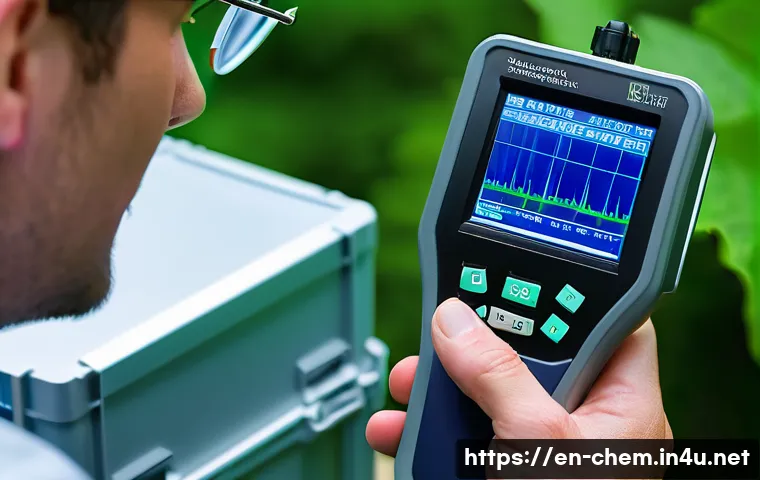
Over the years, advancements in technology have made chemical analysis more precise and accessible than ever before. From spectroscopy to chromatography, each method offers unique insights that can transform industries and improve quality of life.
If you’ve ever wondered how scientists decode complex mixtures or detect trace contaminants, you’re in the right place. Let’s dive deeper and uncover the fascinating world of chemical analysis together!
Unlocking Molecular Secrets with Light
How Spectroscopy Reveals Hidden Details
When I first encountered spectroscopy in a lab setting, I was amazed at how simply shining light on a sample could uncover so much information. Spectroscopy works by analyzing how molecules absorb, emit, or scatter light at different wavelengths.
This interaction creates unique spectral fingerprints that allow scientists to identify specific compounds and their concentrations. For example, UV-Vis spectroscopy helps detect the presence of organic molecules by measuring their absorbance in the ultraviolet and visible regions, while infrared spectroscopy reveals details about molecular bonds by detecting vibrations.
The precision of these methods is incredible, especially when you consider that even tiny amounts of substances can be detected. It’s like having a molecular detective tool that can pinpoint the identity and behavior of chemicals without destroying the sample.
Diverse Types of Spectroscopy and Their Uses
There’s a whole spectrum of spectroscopic techniques, each suited to different analytical challenges. Nuclear Magnetic Resonance (NMR) spectroscopy is a powerful method that gives detailed insight into the structure and environment of molecules.
I’ve used NMR to confirm the arrangement of atoms in complex organic compounds, which was essential for drug development projects. Another popular technique is Mass Spectrometry (MS), often coupled with chromatography, which measures the mass-to-charge ratio of ions to identify molecules.
MS is invaluable when you need to analyze mixtures where components have similar chemical properties but different masses. Fluorescence spectroscopy, on the other hand, is highly sensitive and useful in detecting trace amounts of pollutants or biological markers.
Each method brings a unique perspective, making spectroscopy a versatile cornerstone in chemical analysis.
Practical Considerations and Limitations
While spectroscopy is incredibly powerful, it’s not without challenges. Sample preparation can sometimes be tricky, especially if the substance is unstable or present in very low concentrations.
Also, interpreting spectral data often requires specialized knowledge and experience, as overlapping signals or noise can complicate the analysis. From my experience, modern software tools have significantly eased the burden of data interpretation, but a strong grasp of the fundamentals remains essential.
Additionally, factors like instrument calibration and environmental conditions can affect accuracy, so meticulous attention to detail is crucial. Despite these hurdles, the wealth of information gained from spectroscopic techniques makes them indispensable in both research and industrial applications.
Separating Complexity: The Art of Chromatography
Why Chromatography is the Go-To for Mixture Analysis
Chromatography has been a game-changer in my work whenever I needed to separate complex mixtures into individual components. The principle is elegantly simple: different substances travel through a medium at varying speeds, allowing them to be separated and identified.
Whether it’s liquid chromatography (LC), gas chromatography (GC), or thin-layer chromatography (TLC), each method adapts to specific sample types and analytical goals.
For instance, GC is perfect for volatile compounds like fragrances or pollutants, while LC excels with larger, non-volatile molecules such as pharmaceuticals.
The ability to isolate components from a tangled mixture makes chromatography essential for quality control, forensic analysis, and environmental testing.
How Stationary and Mobile Phases Work Together
At the heart of chromatography lies the interplay between the stationary phase and the mobile phase. The stationary phase is a solid or liquid that remains fixed inside the column or on a plate, while the mobile phase moves through it, carrying the sample along.
The way different molecules interact with these phases—adsorbing, dissolving, or partitioning—determines their rate of movement. I remember setting up high-performance liquid chromatography (HPLC) runs where tweaking the mobile phase’s composition dramatically changed separation efficiency.
This flexibility allows analysts to optimize conditions for even the most challenging samples. The precise control over these variables is what makes chromatography adaptable and powerful for diverse applications.
Real-World Applications and Innovations
In the food industry, chromatography is routinely used to detect contaminants or verify ingredient authenticity, which directly impacts consumer safety.
Environmental agencies rely on chromatographic techniques to monitor air and water quality, tracking pollutants down to trace levels. In pharmaceuticals, chromatography ensures the purity of drugs, preventing harmful impurities from reaching patients.
Innovations like ultra-high-performance liquid chromatography (UHPLC) have pushed the boundaries further, offering faster analysis times and better resolution.
I’ve found that keeping up with these advancements is key to maintaining accurate and efficient workflows. The continuous evolution of chromatography technology reflects its critical role in modern chemical analysis.
Decoding Chemical Identity Through Elemental Analysis
Determining What Elements Are Present
Elemental analysis offers a straightforward approach to understanding a substance’s composition by quantifying its elemental makeup. Techniques like atomic absorption spectroscopy (AAS) and inductively coupled plasma mass spectrometry (ICP-MS) allow us to detect metals and non-metals with remarkable sensitivity.
In my experience, elemental analysis is often the first step when characterizing unknown materials, giving a broad overview of what’s inside. For example, detecting heavy metals in soil samples or trace elements in pharmaceuticals can be critical for safety and compliance.
This type of analysis is also invaluable for materials science, helping to verify alloy compositions or purity levels.
Comparing Sensitivity and Scope of Different Methods
While AAS is excellent for measuring specific elements at moderate sensitivity, ICP-MS offers ultra-trace detection capabilities, sometimes down to parts per trillion.
This makes ICP-MS a preferred choice when analyzing contaminants in drinking water or biological samples where safety thresholds are extremely low. On the other hand, X-ray fluorescence (XRF) spectroscopy provides a non-destructive way to analyze solid samples rapidly, which is highly advantageous for archaeological or geological studies.
Each technique has its strengths and trade-offs in terms of detection limits, sample preparation, and cost. Choosing the right method depends on the analysis goals and available resources, something I always consider before starting a project.
Challenges and Best Practices
Elemental analysis can be complicated by matrix effects, where other components in the sample interfere with measurements. For instance, high concentrations of certain elements can suppress or enhance signals of others, leading to inaccurate results.
I’ve learned that careful calibration using standards that closely mimic the sample matrix is essential to avoid these pitfalls. Sample digestion and preparation protocols also play a vital role in ensuring representative and reproducible results.
Regular maintenance of instruments and running quality control samples help maintain confidence in data integrity. Despite these challenges, elemental analysis remains a cornerstone technique for comprehensive chemical characterization.
Evaluating Chemical Reactions with Titration Techniques
The Fundamentals of Quantitative Analysis
Titration is one of those classic techniques that I find incredibly satisfying because it provides precise quantitative information using simple tools.
The process involves adding a reagent of known concentration to a solution until a reaction reaches its endpoint, often indicated by a color change or pH shift.
This allows determination of the concentration of an unknown substance. I recall using acid-base titrations extensively during my early chemistry courses, but in real-world labs, titrations extend to redox reactions, complexometric analyses, and precipitation reactions.
The versatility and relative ease of titration make it a staple in many industries, from water treatment to pharmaceuticals.
Modern Enhancements to Traditional Titration
Although titration is a centuries-old method, modern instruments have enhanced its accuracy and convenience. Automated titrators now perform the addition of titrant and endpoint detection with minimal human intervention, reducing errors and increasing throughput.
These devices can handle complex titration curves and provide detailed data for further analysis. I’ve worked with automated systems that integrate seamlessly into quality control labs, speeding up routine analyses while maintaining reliability.
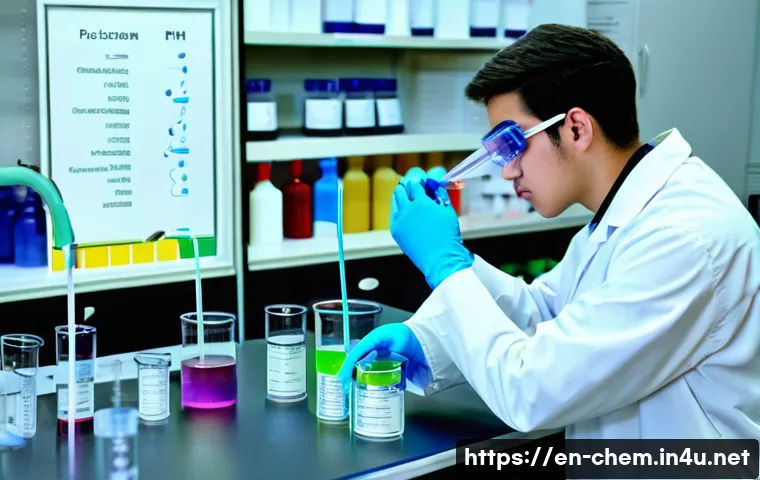
Moreover, potentiometric and spectrophotometric titrations extend the applicability of this technique to samples where visual indicators are impractical.
Such advancements have kept titration relevant and efficient in today’s high-demand environments.
Practical Tips for Accurate Results
One thing I’ve learned from hands-on experience is that proper sample preparation and careful technique are critical for reliable titration outcomes. Factors like temperature, stirring speed, and indicator choice can influence the endpoint detection.
For instance, using the wrong indicator might result in a delayed or premature color change, skewing the results. Calibration of volumetric equipment, such as burettes and pipettes, is also essential to ensure measurement precision.
I always recommend running replicate titrations and including blanks to account for any background interference. These small but important practices can make a big difference in the quality of your data.
Advanced Instrumentation: The Future of Chemical Analysis
Integrating Automation and Artificial Intelligence
In recent years, the integration of automation and AI in chemical analysis has revolutionized how we approach data collection and interpretation. From my perspective, this shift has transformed routine lab work into a more streamlined and insightful process.
Automated sample handling reduces human error and frees up time for researchers to focus on data analysis. Meanwhile, AI-driven software can detect patterns and anomalies in complex datasets that would be difficult to identify manually.
For example, machine learning algorithms can predict reaction outcomes or classify unknown substances based on spectral data, accelerating discovery and decision-making.
This synergy of technology and chemistry is opening doors to smarter, faster, and more accurate analyses.
Miniaturization and Portable Devices
The trend toward miniaturization has made it possible to perform sophisticated chemical analyses outside traditional laboratory settings. Portable devices like handheld spectrometers and microfluidic systems allow on-site testing in environmental monitoring, food safety inspections, and even clinical diagnostics.
I’ve had the chance to use handheld Raman spectrometers during fieldwork, and their ability to provide instant results without sample transport is invaluable.
These compact instruments often come with wireless connectivity, enabling real-time data sharing and remote expert consultation. This accessibility is democratizing chemical analysis and empowering users in various industries to make informed decisions quickly.
Balancing Cost and Performance
While advanced instrumentation offers exciting capabilities, cost remains a consideration for many labs and organizations. High-end equipment can be expensive to purchase, maintain, and operate, which sometimes limits access to cutting-edge methods.
I’ve observed that balancing cost and performance often involves selecting the most appropriate technology for the specific application rather than defaulting to the latest gadget.
For instance, a well-maintained traditional spectrophotometer may suffice for routine quality control, whereas research labs might justify investing in high-resolution mass spectrometers.
Strategic planning and understanding the analytical needs are crucial to maximizing return on investment and ensuring sustainable operations.
Comparative Overview of Key Chemical Analysis Techniques
| Technique | Main Purpose | Strengths | Limitations | Typical Applications |
|---|---|---|---|---|
| Spectroscopy | Identifying molecular structure and concentration | Non-destructive, sensitive, versatile | Requires expertise, interference possible | Pharmaceuticals, environmental monitoring, food analysis |
| Chromatography | Separating mixtures into components | High resolution, adaptable to many samples | Sample prep intensive, expensive equipment | Quality control, forensic analysis, pollution detection |
| Elemental Analysis | Quantifying elemental composition | Highly sensitive, broad elemental range | Matrix effects, sample digestion required | Materials testing, contamination analysis, geology |
| Titration | Quantitative analysis of concentration | Accurate, simple, cost-effective | Limited to certain reactions, manual errors | Water testing, pharmaceuticals, education |
| Advanced Instrumentation | Enhanced data acquisition and analysis | Automated, high throughput, portable options | High cost, complexity | Research, clinical diagnostics, field analysis |
Ensuring Data Integrity and Quality in Chemical Testing
Establishing Robust Quality Control Protocols
Maintaining the reliability of chemical analysis results depends heavily on rigorous quality control practices. From my experience working in various labs, establishing standard operating procedures (SOPs) for sample handling, instrument calibration, and data validation is non-negotiable.
Regularly running control samples and reference standards helps detect deviations early and maintain consistency over time. Documentation plays a vital role here; keeping detailed records ensures traceability and accountability, which is especially important in regulated industries like pharmaceuticals.
Investing time in training personnel on best practices also pays off by reducing errors and improving reproducibility.
Addressing Human Factors and Instrument Variability
Even with the best instruments, human factors can influence chemical analysis outcomes. I’ve seen cases where slight differences in technique or interpretation led to inconsistent results between operators.
To mitigate this, cross-training and proficiency testing are essential components of a quality assurance program. On the instrument side, regular maintenance and performance verification are necessary to avoid drift or malfunction.
Automated systems can reduce variability, but they still require oversight and calibration checks. The combination of skilled personnel and well-maintained equipment creates a reliable analytical environment that fosters confidence in the data generated.
Adapting to Regulatory and Industry Standards
Chemical analysis often operates under strict regulatory frameworks designed to ensure safety and efficacy. Compliance with standards such as ISO/IEC 17025 for testing laboratories or FDA guidelines for pharmaceuticals demands thorough validation and documentation of analytical methods.
I’ve been involved in method validation projects where precision, accuracy, specificity, and robustness were systematically evaluated to meet these criteria.
Staying updated with evolving regulations and industry best practices is critical to avoid costly non-compliance issues. Ultimately, adherence to these standards not only protects consumers but also enhances the credibility and marketability of products and services.
In Conclusion
Exploring the world of chemical analysis reveals how powerful techniques like spectroscopy, chromatography, and elemental analysis unlock the secrets of molecules and mixtures. Each method offers unique insights that drive innovation across industries, from healthcare to environmental protection. With advances in automation and portable devices, the future of chemical testing promises even greater precision and accessibility. Embracing these tools enhances our ability to solve complex problems and ensure safety in everyday products.
Useful Information to Keep in Mind
1. Spectroscopy provides non-destructive and sensitive ways to identify molecules, but mastering data interpretation is key to accurate results.
2. Chromatography excels at separating complex mixtures, and tweaking the stationary and mobile phases can optimize separation efficiency.
3. Elemental analysis requires careful calibration and sample preparation to avoid matrix effects and ensure reliable measurements.
4. Modern titration techniques benefit from automation, improving accuracy and reducing human error in quantitative analysis.
5. Maintaining strict quality control protocols, including regular instrument maintenance and personnel training, safeguards data integrity.
Key Takeaways for Reliable Chemical Analysis
Ensuring dependable chemical testing hinges on selecting the appropriate analytical method for the specific application while considering limitations and costs. Proper sample handling, thorough calibration, and adherence to regulatory standards are essential to maintain accuracy and reproducibility. Integrating automation and staying updated with technological advancements can boost efficiency but require balanced investment decisions. Ultimately, combining skilled expertise with robust quality assurance practices builds confidence in the data that supports critical decisions across diverse fields.
Frequently Asked Questions (FAQ) 📖
Q: What are the most common chemical analysis methods used in laboratories today?
A: In modern labs, spectroscopy and chromatography are the go-to techniques. Spectroscopy, such as UV-Vis or infrared, helps identify molecular structures by measuring how substances interact with light.
Chromatography, including gas and liquid forms, separates complex mixtures into individual components for detailed study. These methods are favored because they provide precise, reliable results quickly, making them invaluable in fields like pharmaceuticals and environmental testing.
Q: How has technology improved the accuracy and accessibility of chemical analysis?
A: Technology has revolutionized chemical analysis by introducing automation, miniaturization, and enhanced sensitivity. Instruments today can detect trace amounts of contaminants that were once undetectable, thanks to advances like mass spectrometry and high-performance liquid chromatography (HPLC).
Additionally, portable devices have made on-site testing possible, speeding up decision-making processes in industries like food safety and pollution control.
From my experience, these improvements not only boost accuracy but also make the techniques more user-friendly, allowing even non-experts to conduct meaningful analyses.
Q: Why is chemical analysis important for everyday life and industry?
A: Chemical analysis is crucial because it ensures the safety, quality, and efficacy of countless products we rely on daily. For example, in pharmaceuticals, it verifies that medications contain the correct ingredients and dosages.
In environmental monitoring, it detects pollutants to protect ecosystems and public health. Even in food production, it confirms that products meet safety standards and nutritional claims.
Personally, I’ve seen how accurate chemical testing can prevent health risks and improve product development, ultimately enhancing our overall quality of life.